Textile Guide · Bath Towels
What 800 GSM Means for Graccioza’s Plush Cotton Bath Textiles
A towel’s weight can hint at how it feels, but it doesn’t tell the whole story. Here’s how to understand 800 GSM, what it may mean for softness and absorbency, and how to care for a dense cotton towel in everyday life.
There’s a distinct pleasure in reaching for a bath towel that feels substantial after a shower: a soft surface, a little reassuring weight, and enough coverage to turn drying off into a comfortable pause. In textile descriptions, that sense of substance is often summarized by three letters and a number: GSM 800.
GSM means grams per square meter. It describes the mass of a square meter of fabric and gives shoppers a practical way to compare towel weights. Graccioza’s Grand Egoist towels are listed at 800 GSM and made from 100% Sea Island Cotton. That combination suggests a dense, plush textile—but GSM is a useful clue, not a promise that every towel will feel or perform in exactly the same way.
Fiber, yarn, weave, finishing and care all contribute to the experience. Understanding how those details work together makes it easier to decide whether a heavy towel suits your bathroom, laundry routine and personal preferences.
What does 800 GSM mean?
Imagine a square of towel fabric measuring one meter on each side. If that square weighs 800 grams, its fabric weight is 800 grams per square meter. The measurement is often shortened to GSM, from “grams per square meter.” For towels, it is commonly used as an indication of how much material is packed into a given area.
A higher GSM towel is generally denser and may feel thicker or more substantial than a lighter one of similar size. A lower GSM towel may be easier to fold into a small bag and may release moisture more readily while drying. These are broad tendencies rather than fixed rules. A towel’s dimensions, yarn structure and finishing can make two items with the same GSM feel surprisingly different.
It is also helpful to separate fabric weight from the weight of the finished towel. GSM refers to weight relative to area, while a full bath towel weighs more or less depending on its dimensions. A large bath sheet in a given fabric will naturally contain more total material than a smaller hand towel made to the same GSM.
In the case of Grand Egoist, 800 GSM signals a notably dense construction. It helps explain why the towel is positioned as plush and substantial, but it does not, by itself, establish how quickly it will absorb a splash, how long it will take to dry, or whether it will suit every household.
Why fiber matters as much as weight
GSM describes mass, not fiber quality. Cotton varieties can differ in fiber length and other characteristics that affect how yarn is spun and how fabric feels. The Grand Egoist collection is described as being made from 100% Sea Island Cotton. That detail adds useful context to the weight figure: the towel’s character comes from its cotton as well as from the amount of material in the weave.
Longer cotton fibers can be spun into fine, strong yarns, although the finished result still depends on processing and construction. The same fiber can produce fabrics with different textures and performance depending on yarn thickness, loop formation, finishing and how tightly the towel is woven. “Cotton” is therefore a starting point, not a complete description of a towel.
Construction matters especially in terry towels. Their raised loops create a three-dimensional surface that can hold water between and around the fibers. The height and density of the loops, the yarn they are made from, and the structure of the base fabric all influence the hand feel and how the towel responds in use. A dense towel may feel enveloping, while a more open construction can feel lighter even when it is made from cotton.
Finishing can shape a towel’s first impression, too. Grand Egoist towels are described as pre-washed and pre-shrunk, a treatment intended to prepare the fabric for use and help limit changes in size during washing. Construction details such as double stitching and bias binding are also relevant to durability because edges and seams experience regular handling.
How weight relates to softness and absorbency
A high-GSM towel often feels plush because there is more fabric in each square meter, but softness is not a direct measurement of density. Fiber quality, yarn, loop structure and finishing affect whether a towel feels smooth, fluffy, crisp or textured. Personal preference plays a part as well: one person’s idea of a wonderfully soft towel may be another person’s preference for something lighter and less bulky.
Absorbency is similarly influenced by more than weight. Cotton fibers can take up moisture, and terry loops provide a broad surface for contact with skin and water. But the way the fabric is built and finished affects how readily moisture enters the textile. Heavy use of fabric softener, for example, can leave a coating on fibers that reduces a towel’s ability to absorb water. That is one reason a towel that feels slick or perfumed after laundering may not dry as effectively as expected.
The product information for Grand Egoist describes the towels as pre-washed and pre-shrunk for absorbency and lasting performance. As with any textile, the best way to maintain the intended feel is to follow its care label and give it room to dry thoroughly between uses. Absorbency can also change with laundering: a new towel may feel different from one that has been washed several times, and detergent or softener residue can influence performance.
Weight is best treated as one part of a wider evaluation. Look at fiber content, construction and care guidance alongside GSM. For the Grand Egoist range, the available details include 100% Sea Island Cotton, 800 GSM density, pre-washing and reinforced finishing. Together, those specifications offer a fuller picture than the number alone.
The trade-off: plushness and drying time
That generous, dense feel has a practical counterpart: a heavier towel can take longer to dry than a lightweight one. It holds more fabric within the same area, and after it has absorbed water it may retain more moisture overall. How long it takes to dry depends on the towel’s construction and size, as well as the humidity, airflow and warmth of the room.
This doesn’t mean that every heavy towel will stay damp for an inconvenient length of time. A well-ventilated bathroom, a spread-out towel rail and adequate time between uses all help. Draping a damp towel in a thick heap or leaving it bunched on a hook makes it harder for air to circulate. If several people share a bathroom, the drying interval between uses may matter as much as the towel’s GSM.
Laundry habits count, too. A large, dense towel occupies more space in the washing machine than a lightweight one. Avoid overloading the drum, since crowded laundry can be difficult to rinse and dry evenly. If using a dryer, follow the product’s instructions rather than assuming that a high heat setting is necessary; excessive heat can be hard on textiles over time.
For someone who values a substantial, enveloping bath towel and has room for it to air out, 800 GSM may be appealing. For frequent travel, a small bathroom with limited ventilation, or a household that needs towels to dry quickly between back-to-back uses, a lighter construction may be more convenient. Neither choice is universally better; the right fit depends on the way the towel will be used.
A practical care routine for dense cotton towels
Good care is less about elaborate rituals than consistency. The Grand Egoist care information calls for machine washing at 104°F, or about 40°C, and advises against bleaching and dry cleaning. Always check the current care label on the towel itself, since instructions for a particular item should take priority over general advice.
To help keep a cotton towel comfortable and useful:
- Wash it according to the care label, using a suitable cycle and detergent.
- Avoid chlorine bleach unless the label specifically permits it; the listed Grand Egoist guidance says not to bleach.
- Use fabric softener sparingly or avoid it if absorbency is a priority, since residue may affect how readily a towel takes up water.
- Do not pack the washing machine so tightly that towels cannot move freely through the wash and rinse.
- After use, spread the towel out on a rail or bar so air can reach more of the fabric.
- Dry it according to the care label. The listed Grand Egoist instructions allow normal tumble drying.
Care can influence both feel and function. Too much detergent may leave residue, while insufficient rinsing can contribute to a coated or less absorbent feel. Promptly removing a dry towel from the dryer can also help prevent unnecessary creasing. The goal is not to make a towel feel artificially slick; it is to keep the cotton clean, dry and ready for its next use.
Choosing the right towel weight for your routine
Before focusing on a number, think about the experience you want. Do you prefer a towel with a thick, cushioned hand, or one that folds down neatly and dries between uses without taking up much space? Do you have a spacious airing rail, or does the bathroom stay humid? Is the towel intended mainly for a leisurely bath at home, or does it need to travel to the gym, pool or beach?
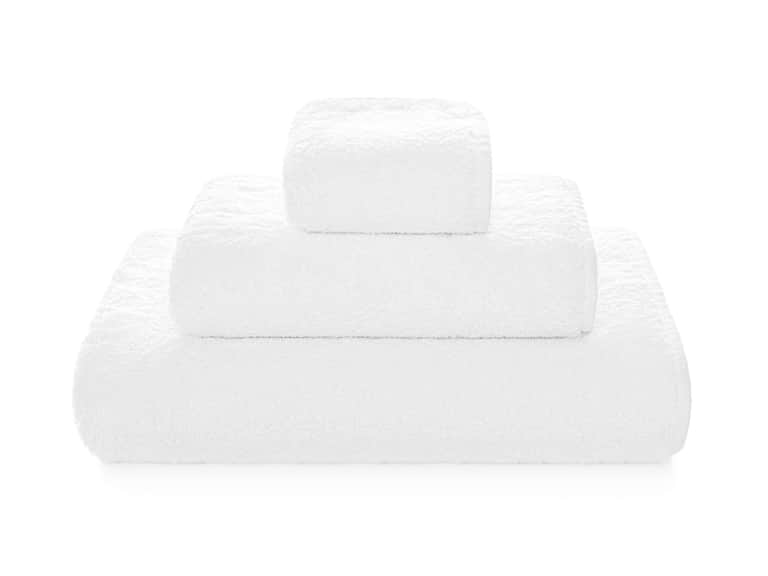
These questions help put GSM in context. An 800 GSM towel may be a strong match for someone who enjoys a plush feel and doesn’t mind a larger item in the laundry. It may be less convenient when compact packing or rapid drying is the priority. Think about size, too: the Grand Egoist range includes several formats, from washcloth and guest towel to bath towel and bath sheet. Choosing an appropriate size can matter just as much as choosing a particular weight.
It can also help to consider the rest of your household. A towel used once a day in a well-aired space has a different routine from one shared by a busy family after several showers. A dense textile may work beautifully when it has time to dry fully. Where that isn’t practical, maintaining a rotation of clean towels can give each one more time to air.
There is no single ideal towel weight for everyone. GSM makes comparison easier, but the best decision comes from matching the fabric’s characteristics to real-life habits rather than treating a higher number as an automatic upgrade.
A quick guide to reading towel specifications
When a product description lists a towel’s material and construction, read those details as a team. GSM explains fabric weight by area; fiber content identifies the material; weave or construction describes how it is assembled; dimensions tell you how much coverage to expect; and care instructions show what routine the textile is designed to handle.
For Grand Egoist, those details point to a dense cotton towel with a plush feel and a substantial footprint in the larger sizes. The 800 GSM figure is meaningful, but it cannot independently guarantee a specific drying time or level of softness. Nor does it tell you how the towel will feel against your skin after repeated washing. Those outcomes depend on the interaction of material, construction, finishing and use.
Pay attention to the practical notes as well as the headline specifications. If a towel is intended to be tumble dried, confirm the recommended settings. If a care label excludes bleach or dry cleaning, treat that as part of the product’s requirements. Small, repeatable habits are usually more useful than trying to compensate for a dense textile with aggressive washing or excessive heat.
The takeaway on 800 GSM
For Graccioza’s Grand Egoist towels, 800 GSM is a clear sign of substantial fabric weight and a plush, dense construction. The 100% Sea Island Cotton content and the listed finishing and stitching details help explain the towel beyond its headline number. Together, these specifications describe a bath textile designed to feel generous and comfortable.
But GSM is not a complete performance score. It does not settle softness, absorbency, durability or drying time on its own. Those qualities emerge from fiber, yarn, terry construction, finishing and how the towel is washed and dried. A dense towel can be a welcome everyday luxury when its weight suits your preferences and your laundry routine.
In the end, the useful question isn’t simply “How high is the GSM?” It’s “Does this towel’s weight, feel and care routine fit the way I live?” Answer that, and 800 GSM becomes more than a label: it becomes a practical clue to what you can expect from the fabric.